Beyond the Box: Understanding Apple's Continued Investment in Custom Silicon for iPhone
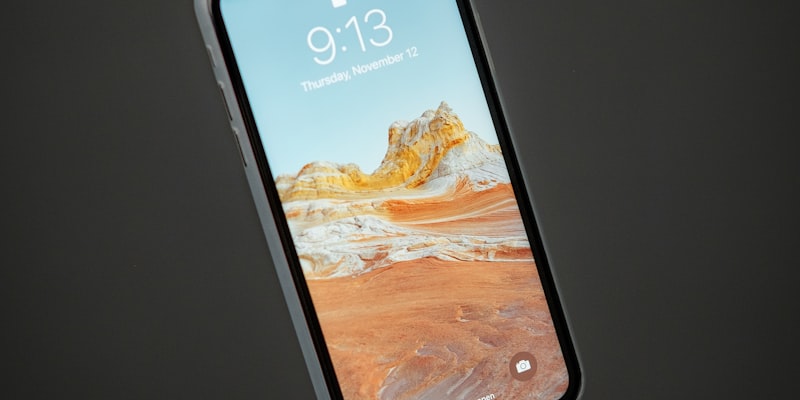
Photo: Unsplash
Editor's pick: Android-to-iPhone migration accessories on Amazon → As an Amazon Associate, this site earns from qualifying purchases.
Beyond the Box: Understanding Apple's Continued Investment in Custom Silicon for iPhone
2026-03-05 - For years, Apple has championed its custom silicon in iPhones, moving away from off-the-shelf solutions like those from Qualcomm and MediaTek that predominantly power Android devices. While marketing often highlights performance gains, the strategic implications of this vertical integration run far deeper, impacting everything from supply chain control to future feature development.
The Strategic Advantage: Control and Optimization
The primary driver for Apple's custom silicon is control. By designing its own chips, Apple dictates the entire user experience, from the operating system (iOS) down to the hardware level. This tight integration allows for unparalleled optimization. Consider the Neural Engine, a dedicated block of silicon for accelerating machine learning tasks. Apple can tailor this engine specifically to the needs of iOS features like on-device Siri processing, image recognition, and augmented reality experiences. This level of fine-tuning is simply not possible with generic processors.
Furthermore, custom silicon allows Apple to differentiate its products. Features like Cinematic Mode, which relies heavily on real-time processing of depth information, are only possible because Apple designs the silicon capable of handling the computational load efficiently. This creates a unique selling proposition that is difficult for competitors to replicate quickly.
Supply Chain Resilience and Cost Considerations
The global chip shortage of the early 2020s underscored the fragility of relying on external suppliers. While Apple wasn't immune, its control over chip design provided a degree of insulation. By contracting directly with manufacturers like TSMC, Apple can prioritize its orders and better manage supply chain fluctuations. This also allows Apple to negotiate more favorable pricing, ultimately impacting profitability.
However, the development of custom silicon is an expensive endeavor. Apple invests billions of dollars annually in research and development. This investment is justified by the long-term benefits of control, optimization, and differentiation. Public filings, including Apple's annual 10-K reports, consistently show significant R&D expenditures, directly attributable to silicon development.
Future Implications: The Connected Ecosystem
Apple's vision extends beyond individual devices. The "Apple Silicon" initiative, which unifies the chip architecture across iPhones, iPads, and Macs, is crucial to its long-term strategy. This common platform facilitates seamless integration between devices. For example, the Continuity Camera feature, which allows users to use their iPhone as a webcam for their Mac, is a direct result of this unified architecture.
Industry reports, such as those from Counterpoint Research, suggest that Apple is exploring further integration of its silicon across other product categories, including wearables and potentially even future automotive ventures. Patents filed by Apple, such as those related to advanced display technology and sensor integration, often reference custom silicon solutions optimized for specific applications. These patents provide clues about Apple's future product roadmap.
What This Means for iPhone Switchers
For Android users considering a switch to iPhone, Apple's custom silicon represents a significant value proposition. It's not just about faster benchmarks or better gaming performance. It's about a more integrated, optimized, and future-proofed experience. The tight hardware-software integration translates to smoother performance, longer battery life, and access to unique features that are difficult to replicate on Android devices. While Android devices often offer impressive specifications on paper, the real-world performance and long-term usability of iPhones are often enhanced by Apple's silicon strategy. This advantage will likely continue to grow as Apple further refines its custom silicon designs and expands its ecosystem integrations.
Recommended from our network
Questions readers ask
Where is Apple's supply chain on apple custom silicon right now?
Reports out of Asia consistently cite a handful of suppliers competing on the relevant component, with Apple splitting orders rather than single-sourcing. That hedging pattern tends to mean a real product is being prepared, not just an R&D exploration.
Is apple custom silicon realistic for the next iPhone, or further out?
Most signals point to a later cycle rather than imminent release. Component lead times for apple custom silicon suggest Apple is still validating the supply side, and the company tends to wait until yields hit production targets before committing on stage.
What's the biggest tradeoff Apple has to swallow for apple custom silicon?
Every Apple decision is a tradeoff, and the obvious one here is internal volume. Adding apple custom silicon costs millimetres somewhere — usually battery capacity or camera module depth — and Apple has to decide which line item to trim.
What does apple custom silicon actually cost — in price, weight, or battery?
Expect a premium of roughly $200–300 over the standard model, plus a small weight penalty. Battery life is the bigger variable — early prototypes typically trade an hour or two of screen-on time for the new capability, then claw it back over a generation.
In short — what's the takeaway on more from iphone switch?
It comes back to whether Apple can ship apple custom silicon without compromising the parts of the iPhone people already pay for. The detail in this section is where that case is made or broken.